
The Art of Placement: With Austin Maples
Sleeve design from start to finish. Watch Austin Maples lay out a full traditional sleeve on a client: panels, main pieces, elbow and shoulder webs, and every layer of filler. He built the system from 15 years of clients coming back to finish their arms, and now he's sharing it here exclusively with you.
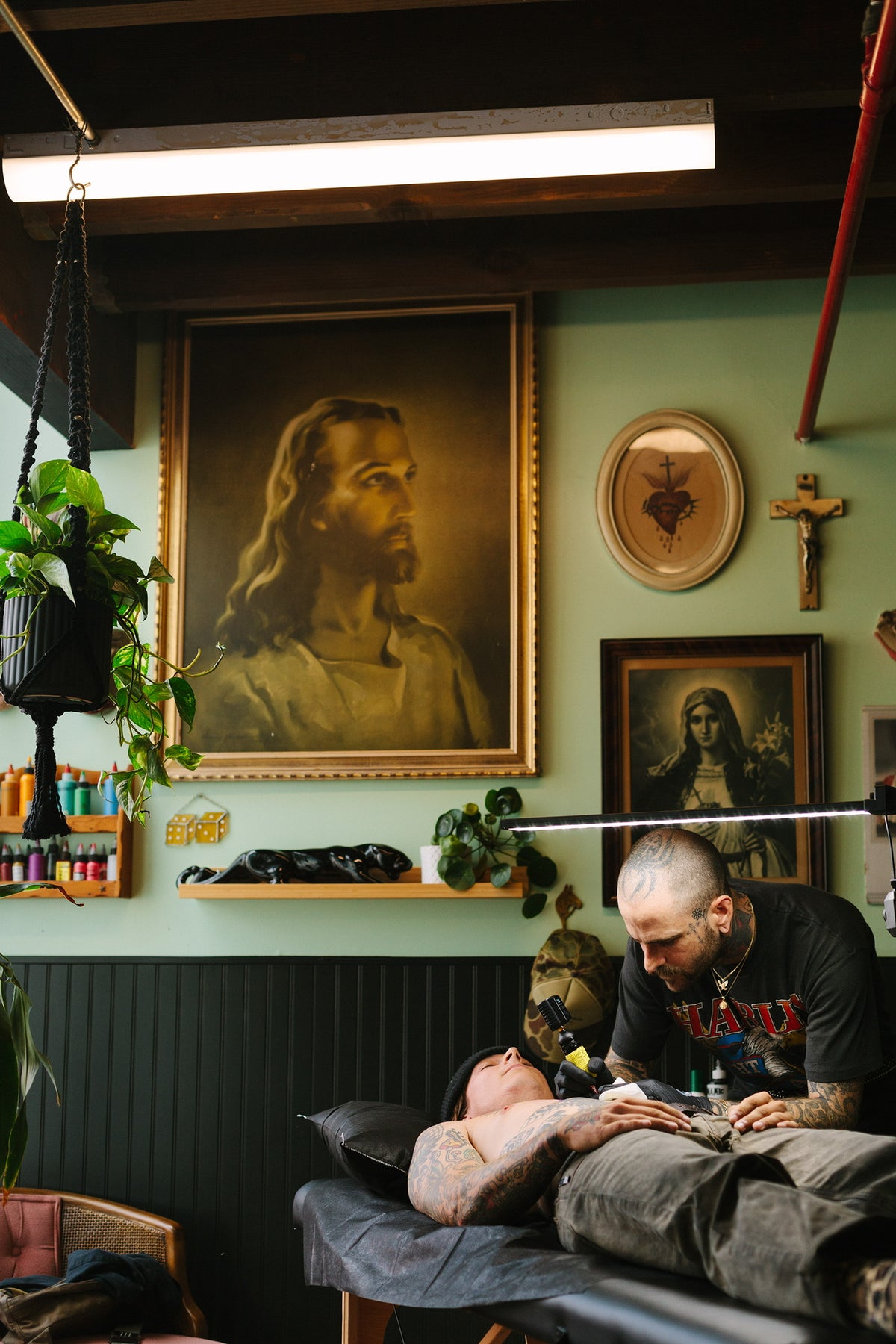
The problem
Most sleeves aren't planned. They pile up.
Clients rarely book a full sleeve on day one. They come in for one tattoo, then another, and years later ask you to finish the arm. By then the first piece sits in the middle of the back of the forearm, the bicep piece runs into the ditch, and there's no clean spot left for the elbow web.
Austin has clients who've come back to him for 10 to 12 years. Watching those arms fill in showed him exactly where layouts go wrong. So he built a system for placing each tattoo where it belongs, even when the sleeve gets done one piece at a time.
“A lot of tattooers want to do the design, so they forget about the next tattoo that's going to be there. That's how you end up in a predicament where the sleeve doesn't fit together right.”
— Austin
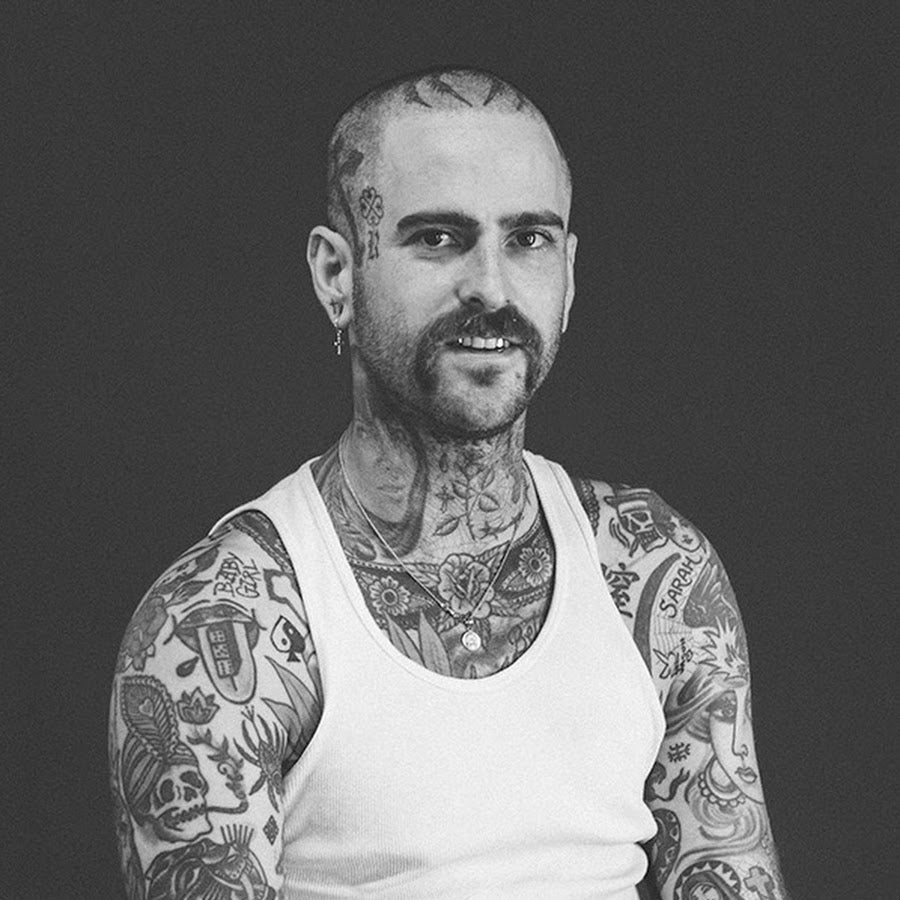
Meet Austin
Taught by someone who'swatched sleeves grow for over a decade
Austin Maples is a LA-based tattooer known for bold, dark American traditional work. In 15 years of tattooing, many of his clients have kept coming back to him for 10 to 12 years. That's long enough to see how early placement decisions play out across a whole arm.
The Art of Placement is his process, start to finish, on a real client. He works by hand with skin markers and a few printed stencils, talking through each decision as he makes it.
The Method
Four panels. one conversation that changes every consultation.
Austin splits the arm into four panels and ranks them by how often they're seen. That ranking tells you what goes where and what to tattoo first.
"The identity of your arm." It's what shows in the mirror, in photos and in conversation, so the client's most important pieces go here.
It shows when you shake hands or talk, and even with the arm relaxed. The second identity of the sleeve.
Hidden until the arm lifts. A lot of real estate for something great, like the "main event" you can flash.
Rarely seen by the wearer, so it gets secondary pieces and more freedom.
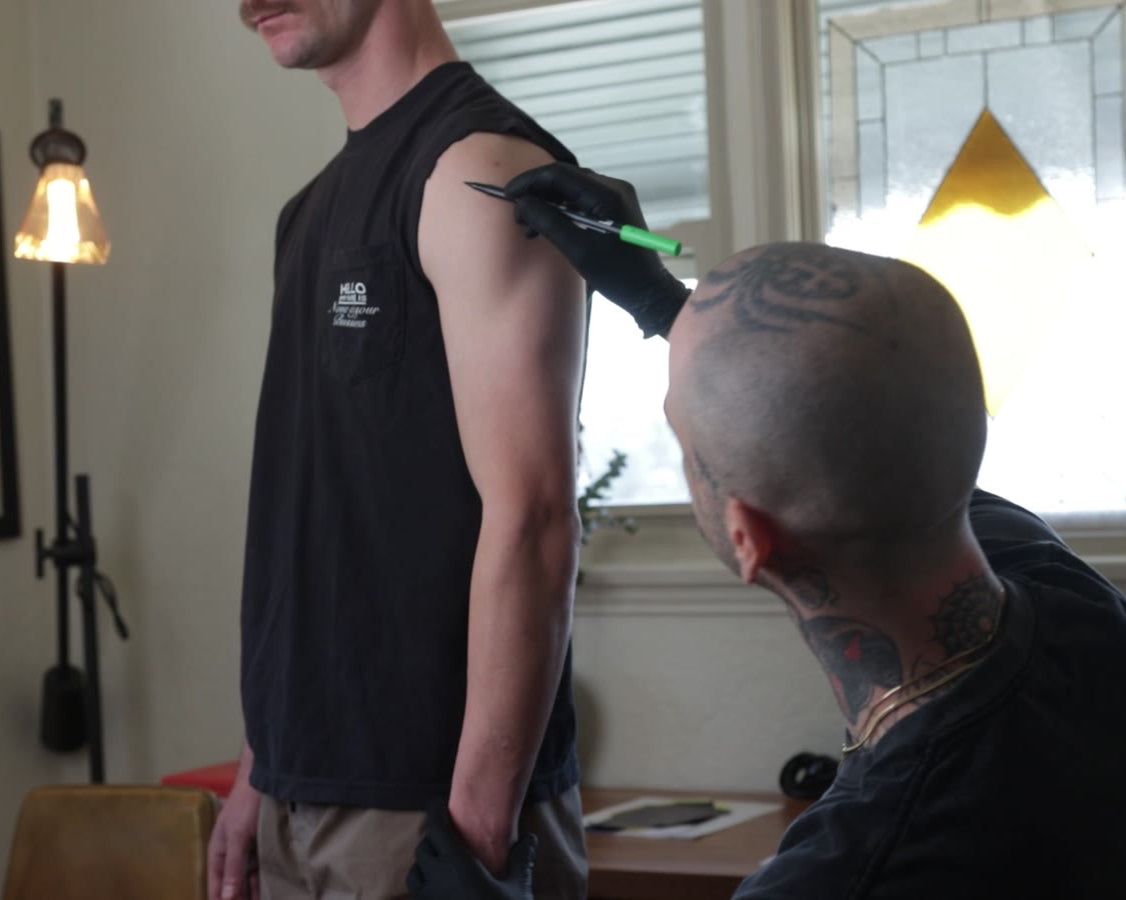
Map the arm before you place anything
Find the muscle lines, mark a 2–3 inch zone around the elbow and the ditch, and draw the shoulder cap line down to where the pec meets.
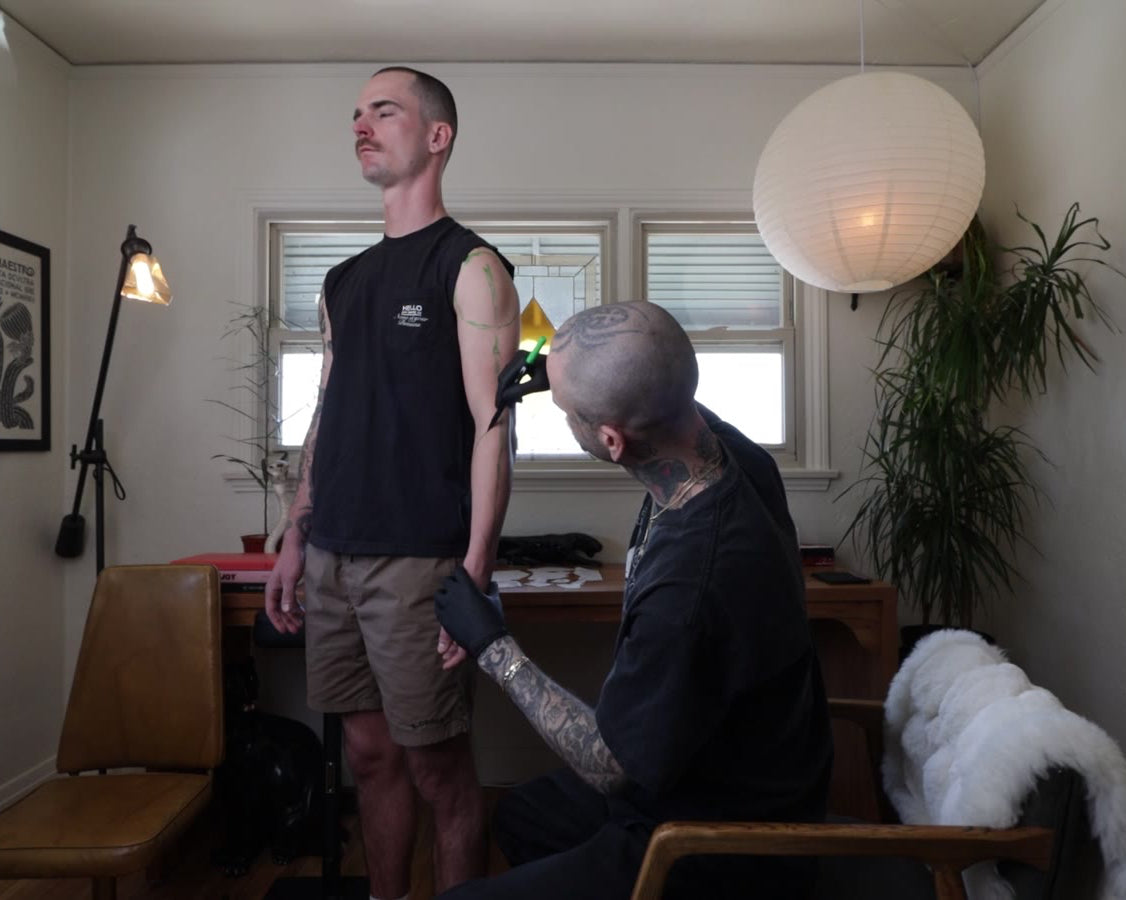
Turn a client's wish list into a layout
Combine subjects into stronger pieces, like a dagger and snake in one tall forearm tattoo, and give each piece the spot that suits its shape.
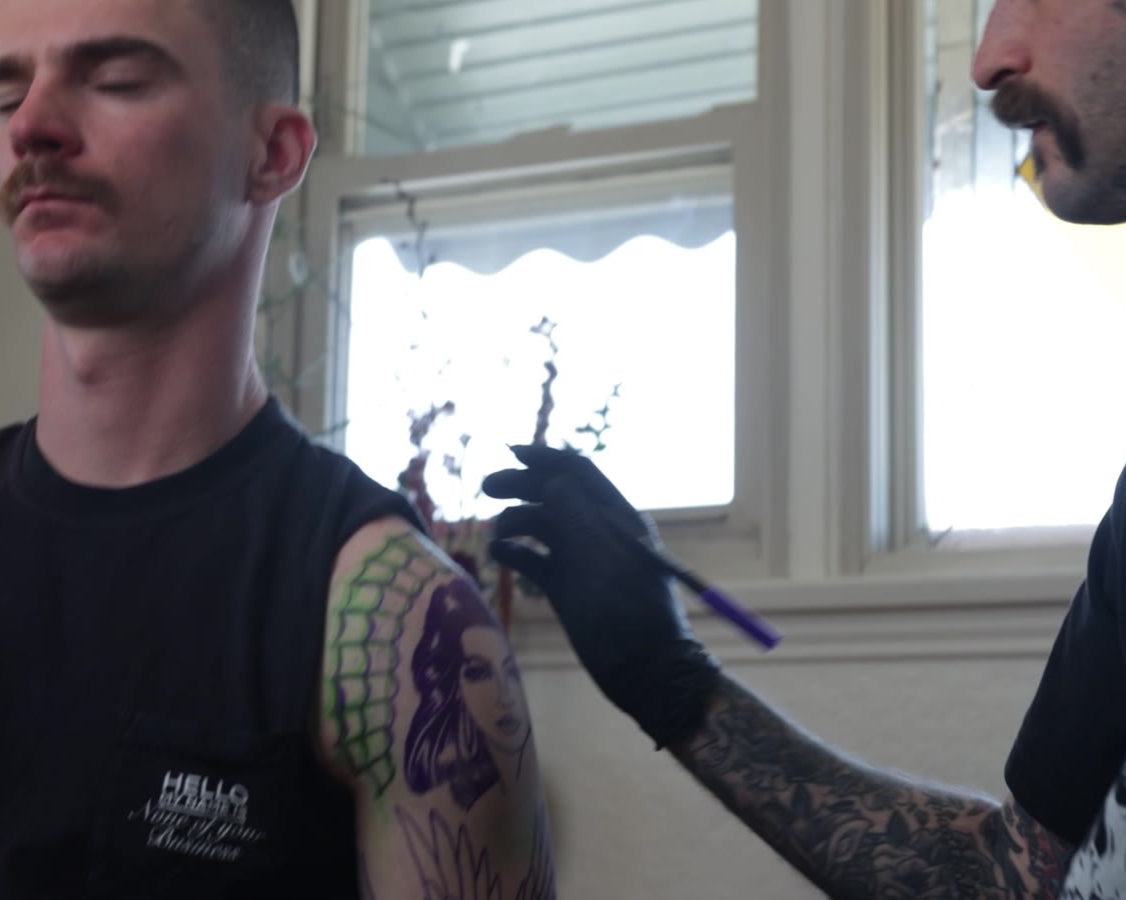
Match the design to the anatomy
Tall pieces suit the narrow front of the forearm and wide ones suit the flat inside. Keep each piece readable top to bottom at its intended angle, and never tuck one tattoo behind another.
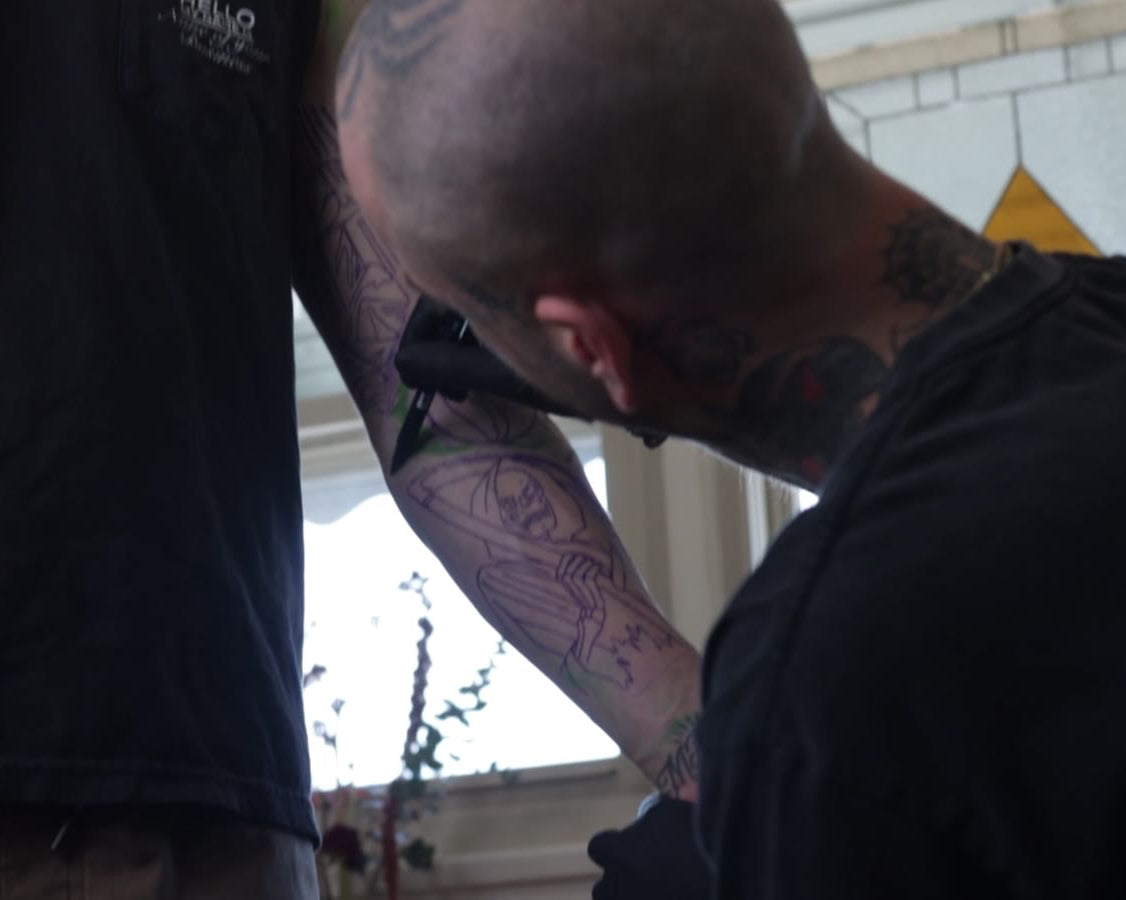
Get spacing right
Austin leaves 3–5 mm between tattoos and keeps an even "skin river" around every piece.
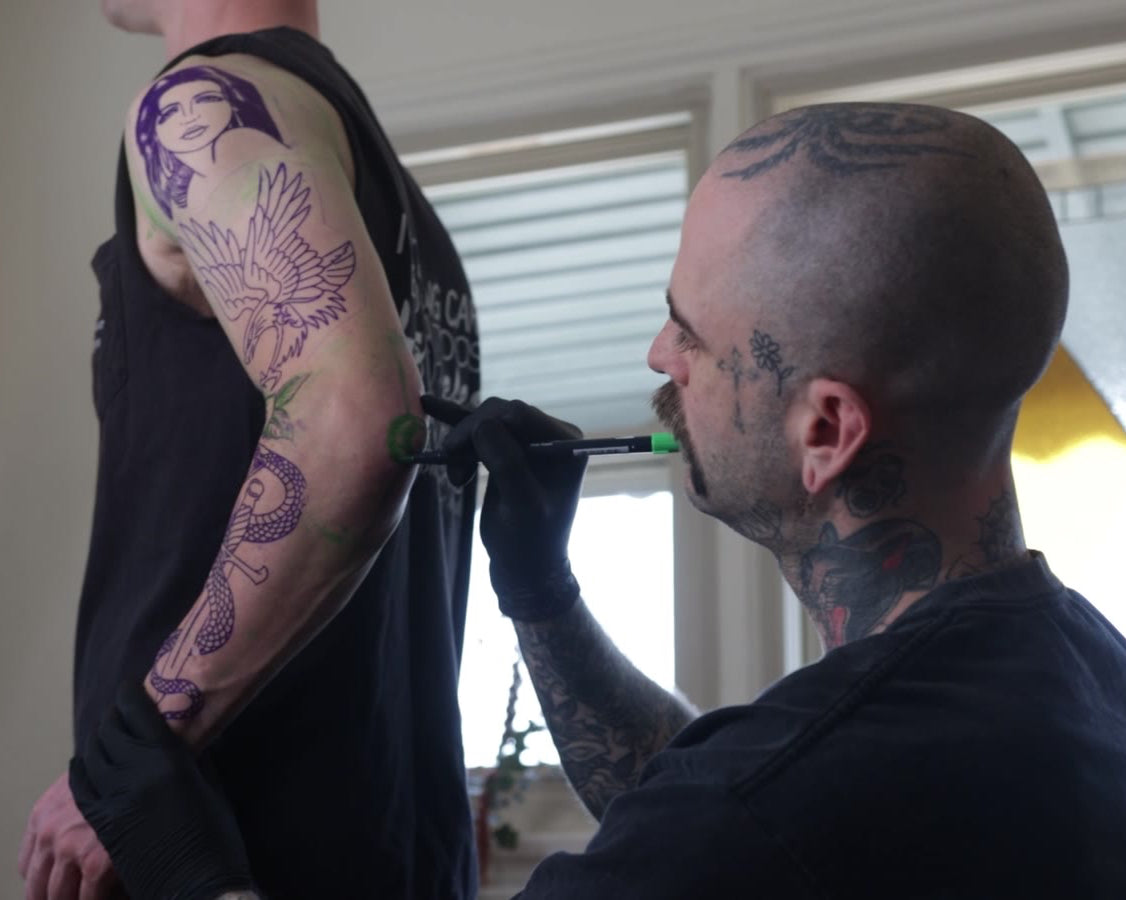
Tie the shoulder to the elbow
A tapered web on the shoulder cap creates a sunburst around the portrait below it.
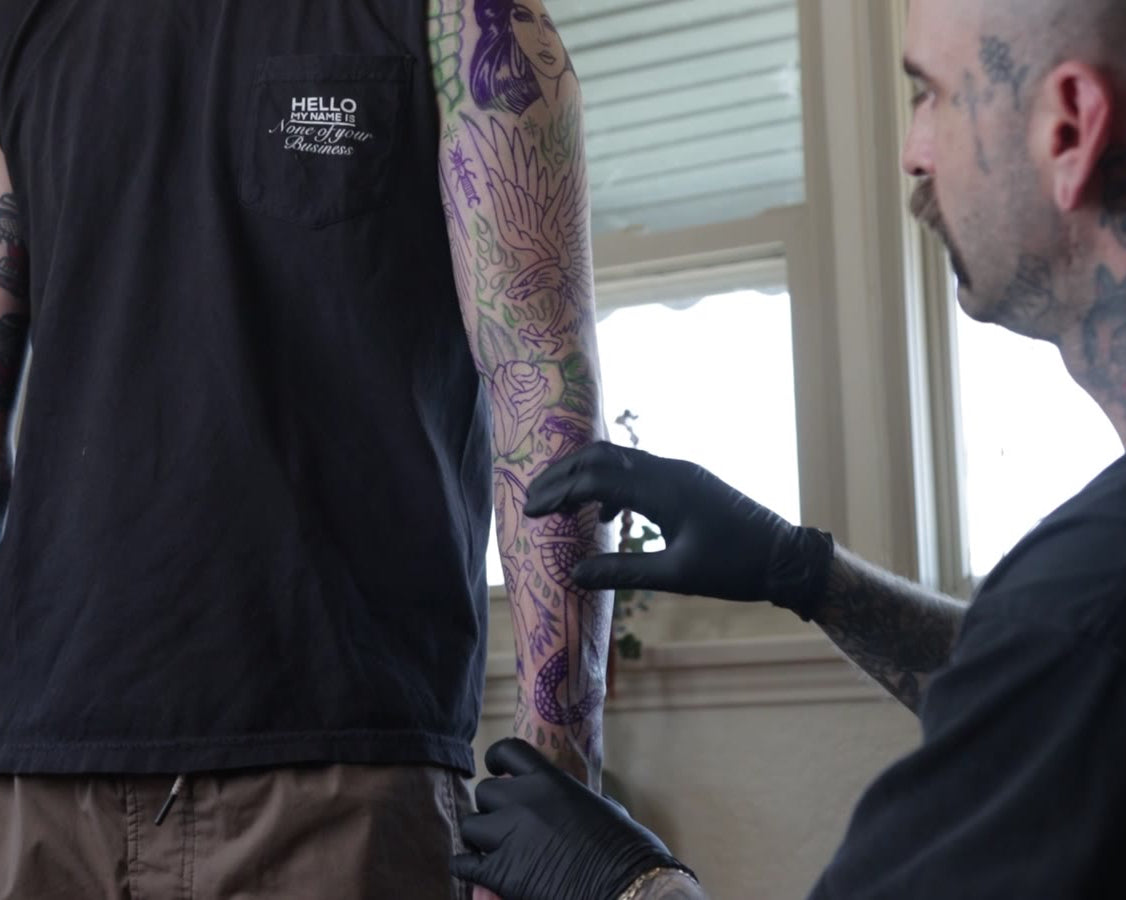
Build filler that tells a story
Bugs fly into the webs, roses repeat, flames travel up the arm and blood and venom rain down. Movement and continuity hold the sleeve together.
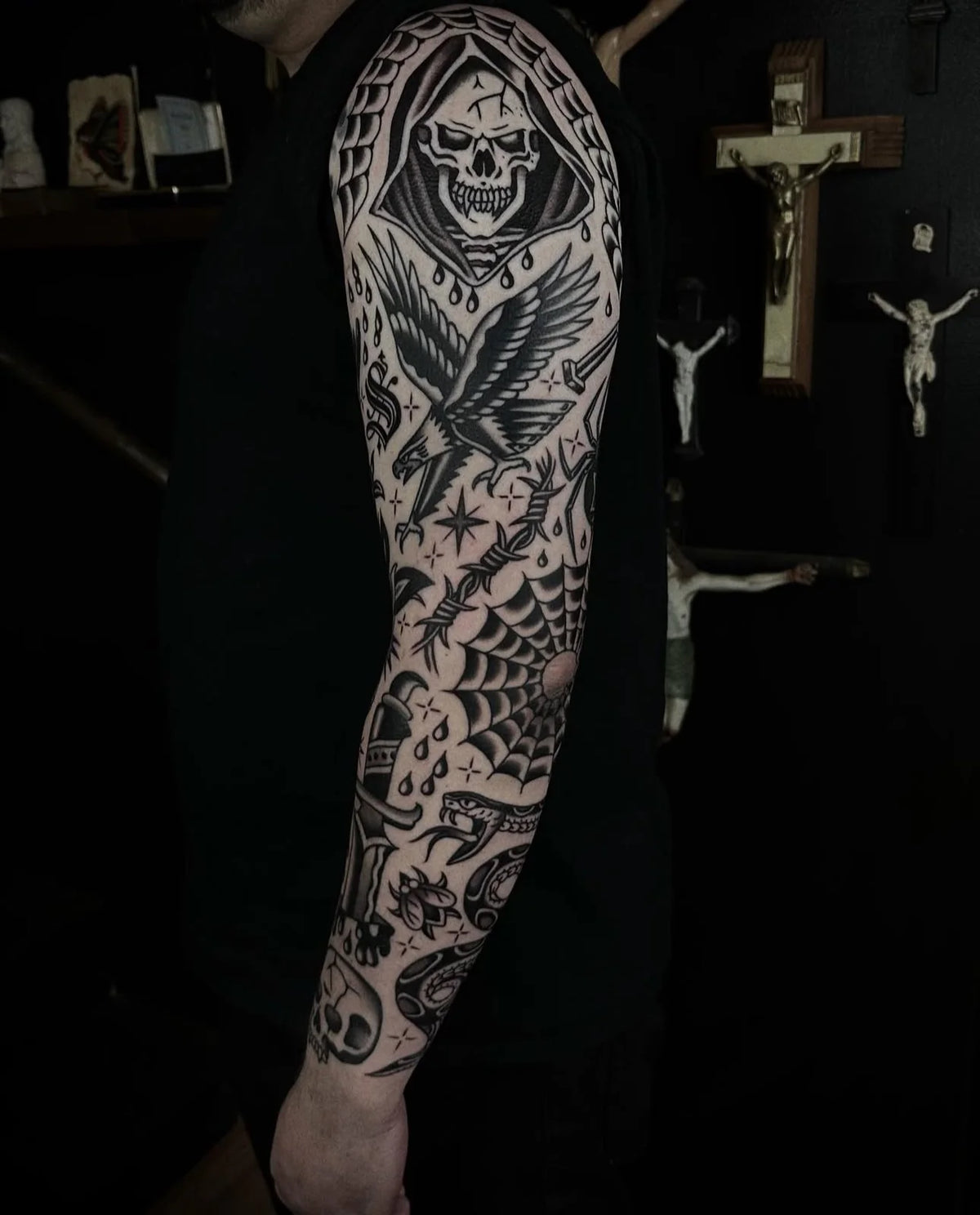
The result


FAQ
No. Austin lays out the full arm at once to show the whole system, but he explains how to use the same layout for clients getting one or two tattoos at a time.
The course covers the layout, up to the point where he'd start tattooing. It ends with the full sleeve drawn on and a walkthrough of why each piece sits where it does.
The examples are traditional, but the panel system, spacing and filler principles apply to any sleeve built from separate pieces.
Skin markers, a few printed stencils and his hands. He also mentions alternatives: photographing the arm and drawing on an iPad, or making contact-paper stencils from the drawn layout.
That's how this sleeve began. The client gave Austin a list: an eagle, a girl head, a dagger, a snake, a reaper, black roses, bugs and sparrows. Lesson 3 shows how he combines and places them, and which pieces he'd tattoo first.
Yes. The client in the course already has a tattoo on that arm, and Austin shows how he adjusts the filler around it.
You have lifetime access once you pay for the course, complete it at your own pace, and come back to it anytime.
Place every tattoo like the sleeve is already finished.
Every piece you put on an arm decides where the next one can go. Learn the system Austin uses to make those decisions, and give your clients sleeves that fit together.